
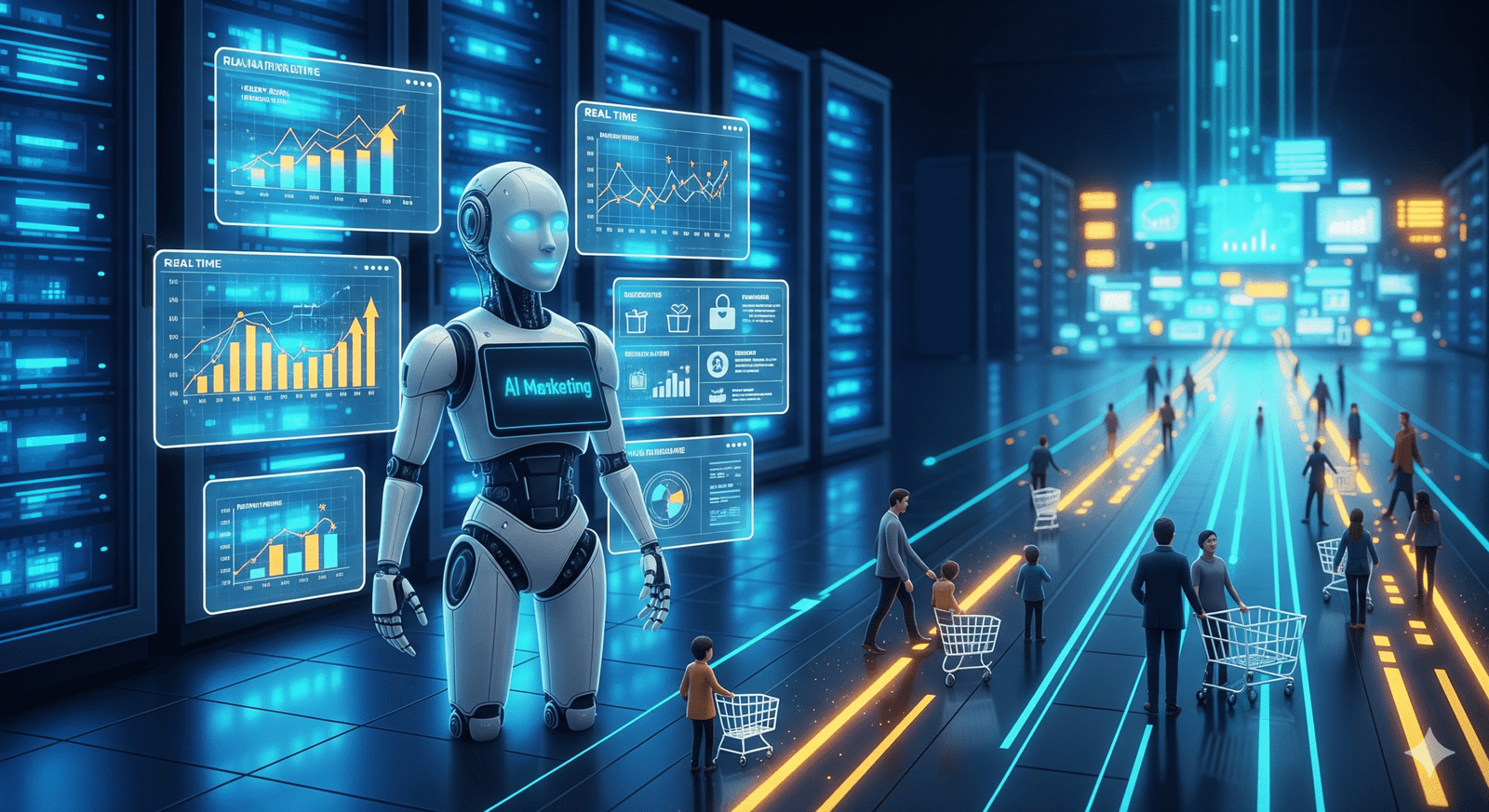
In the hyper-competitive world of e-commerce, your website is your everything. It’s your flagship store, your showroom, your sales floor, and your brand’s primary interface with the world. You invest a small fortune in driving traffic to this digital asset—through sophisticated SEO, meticulously crafted ad campaigns, and engaging social media content. You pour thousands of potential customers into the top of your marketing funnel. And then, for most businesses, the majority of them simply leak away.
Studies consistently show that the average e-commerce conversion rate hovers around a mere 2-3%. That means for every 100 visitors you fight to acquire, 97 of them leave without making a purchase. They browse, they consider, they add items to their cart, and then they vanish into the digital ether. This is the painful, expensive reality of the “leaky bucket” that is traditional e-commerce. As a marketing strategist who has spent two decades helping businesses grow, I can tell you that the most profound gains are not always found in pouring more water into the top, but in plugging the holes in the bucket itself.
For years, we’ve tried to plug these holes with a patchwork of tools: pop-up apps, email automation rules, basic product recommenders. These are often dumb, rule-based systems that treat every customer the same, sometimes creating more annoyance than assistance. But a new era of technology is upon us, one that offers a truly revolutionary solution. The AI Marketing Agent is not just another tool; it is a fundamental paradigm shift.
Imagine having an infinite team of your very best, most intuitive personal shoppers and sales associates, available 24/7 to greet every single visitor to your site. A team that knows each customer’s history, understands their real-time behavior, anticipates their needs, and expertly guides them toward the perfect purchase. This is no longer science fiction. This is the practical, achievable reality of AI Marketing Agents. This guide is a strategic playbook for e-commerce leaders who are ready to stop leaving money on the table and start building a truly intelligent, automated sales engine.
The anatomy of a lost sale: why traditional e-commerce funnels fail
To understand why AI agents are so transformative, we must first be brutally honest about why the traditional e-commerce experience so often fails to convert.
The paradox of choice and the death of discovery
The modern e-commerce store is often a victim of its own success. A catalog of 10,000 products, while impressive, can be utterly overwhelming for a new visitor. When a customer lands on a site looking for a “black dress,” being presented with 500 options is not helpful; it’s paralyzing. This is the “paradox of choice.” Without intelligent guidance, the customer is left to navigate a complex maze of filters and categories. If the discovery process is too difficult or time-consuming, they will simply abandon the search and go to a competitor with a more curated experience.
The generic experience: treating your VIPs like strangers
The traditional website is a one-size-fits-all brochure. It shows the exact same homepage, the same “bestsellers,” and the same product recommendations to a brand-new visitor as it does to a loyal, repeat customer who has spent thousands of dollars with you. This is a massive missed opportunity. Your best customers are your biggest asset, yet the traditional e-commerce model treats them like anonymous strangers with every single visit, failing to acknowledge their history or reward their loyalty.
The abandoned cart: the final, frustrating hurdle
The abandoned cart is the graveyard where profits go to die. A customer has done the hard work: they’ve browsed, they’ve chosen, they’ve committed. And then, at the final step, something goes wrong. The reasons are numerous: unexpected shipping costs, a demand to create an account, a complicated checkout form, or a simple distraction in the real world. The traditional, reactive approach is to send a generic “You left something in your cart!” email 24 hours later. By this point, the initial purchase intent has often completely evaporated, and the customer has moved on.
What is an AI marketing agent in an e-commerce context?
An AI Marketing Agent is not just a better chatbot. It is an autonomous, goal-oriented system that uses a deep understanding of each individual customer to make real-time decisions that drive them toward a specific business outcome, like making a purchase or increasing their order value.
From rigid rules to autonomous decisions
The key difference lies in the shift from simple automation to true autonomy.
- The old way (Rule-Based Automation): This is a rigid, “if this, then that” workflow. For example: “IF a user is on a product page for more than 30 seconds, THEN show them a generic 10% off pop-up.” This system is blind to the user’s context.
- The new way (AI Agents): The agent is given a high-level goal, such as “increase average order value.” It then analyzes a specific user’s entire context—their past purchases, their real-time browsing behavior, the items in their cart—and makes a dynamic, autonomous decision. It might offer a highly relevant cross-sell, an intelligent upsell, or it might decide that for this particular high-value customer, a pop-up would be intrusive and instead do nothing at all.
The engine: a unified profile and powerful predictive models
This intelligent decision-making is powered by a sophisticated engine working behind the scenes.
- The Unified Customer Profile: The agent’s “memory.” It breaks down data silos by connecting your e-commerce platform (e.g., Shopify, Magento, WooCommerce), your email marketing system, your analytics, and your customer support platform. This creates a single, 360-degree view of every customer’s entire history and relationship with your brand.
- The Predictive Brain: A series of machine learning models analyzes this unified profile to make predictions about future behavior. These models can predict a customer’s propensity to buy, their likelihood of churning, their potential lifetime value (LTV), and, most importantly, the next best product to recommend.
The AI agent playbook: 5 strategies to directly increase your e-commerce sales
Let’s move from theory to a practical, actionable playbook. Here are five specific, high-impact strategies that you can deploy with AI Marketing Agents to drive measurable revenue growth.
Strategy 1: turn your website into a personal shopper with hyper-personalized discovery
The goal here is to combat the “paradox of choice” and make the product discovery process effortless and enjoyable.
-
Dynamic, one-to-one homepages: The AI agent ensures that no two customers see the exact same homepage.
- A new visitor arriving from an ad for “women’s running shoes” is greeted with a homepage that features your best-selling running shoes, a guide to finding the right fit, and testimonials from female runners.
- A returning customer who has previously purchased hiking boots is greeted by name and shown a homepage featuring “New Arrivals in Outdoor Gear,” a curated collection of waterproof jackets, and a link to a blog post about the best local hiking trails.
-
Conversational commerce: the AI sales assistant: The AI chatbot becomes a true sales assistant. Instead of forcing users to click through endless filters, it engages them in a conversation.
- Agent: “Welcome to our store! Are you shopping for a special occasion, or for everyday wear?”
- User: “I need a dress for a summer wedding.”
- Agent: “How exciting! What’s the dress code? Is it a formal, cocktail, or a more casual beach wedding?”
- User: “Beach wedding.”
- Agent: “Perfect. I’ve selected three of our best-selling, lightweight linen and cotton dresses that would be absolutely perfect for a beach wedding. Would you like to see them?” This is the digital equivalent of a skilled personal shopper, available 24/7 to every single visitor.
Strategy 2: increase average order value (AOV) with intelligent cross-sells and bundles
The AI agent is a master at identifying opportunities to increase the value of each transaction in a helpful, non-intrusive way.
- Predictive, data-driven cross-sells: The agent goes far beyond the generic “Related Products” widget. It uses data to make intelligent recommendations. After a customer adds a specific, high-end digital camera to their cart, the AI doesn’t just show them other cameras. It shows them the exact memory card model that is most frequently purchased with that camera, the specific lens that is most popular among owners of that model, and the camera bag that perfectly fits its dimensions.
- Dynamic, intelligent bundling: The AI can identify products that are frequently purchased together and dynamically create a compelling bundle offer directly on the product page. For a customer looking at a new smartphone, the agent could create a “Complete Protection” bundle that includes the phone, a best-selling screen protector, and a compatible case, offered with a small “5% off the bundle” incentive.
Strategy 3: recover lost sales with predictive cart abandonment intervention
Instead of sending a generic email a day later, the AI agent intervenes in real-time, at the moment of abandonment.
-
Intelligent exit-intent offers: The AI can detect user behavior that signals they are about to leave the site with items in their cart (e.g., the mouse moves rapidly towards the top of the screen). Before they can click away, it triggers a highly personalized, real-time intervention.
- If the AI predicts the user is sensitive to shipping costs, it might offer a pop-up: “Wait! Complete your order now and get free shipping.”
- If the user is hesitating on a high-value item, it might show a pop-up with a powerful customer testimonial for that exact product to build social proof and confidence.
- If the user is a known VIP customer, it might offer a small, exclusive discount code to reward their loyalty. This proactive, context-aware intervention is dramatically more effective than a reactive email sent 24 hours later.
Strategy 4: drive repeat purchases with proactive and predictive re-engagement
The AI agent’s memory (the unified customer profile) is its greatest asset in building long-term loyalty.
-
Personalized replenishment and repurchase cycles: The agent knows the typical usage cycle of your products.
- If a customer buys a 30-day supply of skincare cream, the AI can automatically trigger a friendly, personalized re-order reminder email on day 25.
- If a customer bought a new printer six months ago, the AI can predict they are running low on ink and send a targeted offer for the correct ink cartridges.
- Proactive “win-back” campaigns: The agent’s churn prediction model identifies high-value customers who have become inactive. Instead of a generic “We miss you!” blast, the AI can trigger a hyper-personalized campaign. For a customer who previously bought several items from your “Modern Farmhouse” decor collection, the agent can send an email showcasing the “New Arrivals in our Modern Farmhouse Collection,” complete with a special “welcome back” offer.
Strategy 5: maximize customer lifetime value (LTV) by identifying your future VIPs
The AI can act as a talent scout, identifying your future best customers from their very first interaction.
- Predictive LTV modeling: The agent’s machine learning models can analyze the behavior of a new customer and compare it to the patterns of your existing VIPs. A new customer who spends a long time on the site, reads your brand story, buys a high-margin product, and signs up for your newsletter might exhibit the exact characteristics of your top 10% of customers.
- Automated VIP track enrollment: The agent can automatically tag these high-potential users and enroll them in an exclusive VIP communication track. From that moment on, they receive a higher level of service: early access to new products, exclusive offers, and invitations to special events. This allows you to cultivate a loyal, high-value relationship from day one.
The new retail reality: a seamless blend of human touch and machine intelligence
The vision outlined above may seem like it removes the human element from e-commerce, but the reality is the exact opposite. By delegating the repetitive, data-intensive, and scalable tasks of personalization to AI agents, you free up your human team to focus on the things that machines can never replicate.
Your human marketing team is no longer bogged down in the manual setup of a hundred different email segments or ad campaigns. They are the strategists who define the goals for the AI agents. They are the creative minds who craft the brand’s voice and story. They are the empathetic community managers who handle the complex, nuanced customer interactions that the AI escalates to them.
The most successful e-commerce brands of the future will not be the ones with the most advanced AI. They will be the ones that master the art of the human-AI collaboration. They will use AI to create a customer experience that is both flawlessly efficient and deeply, surprisingly human. This is not just about increasing sales; it is about building a brand that customers don’t just buy from, but truly love.
Leave a Reply