
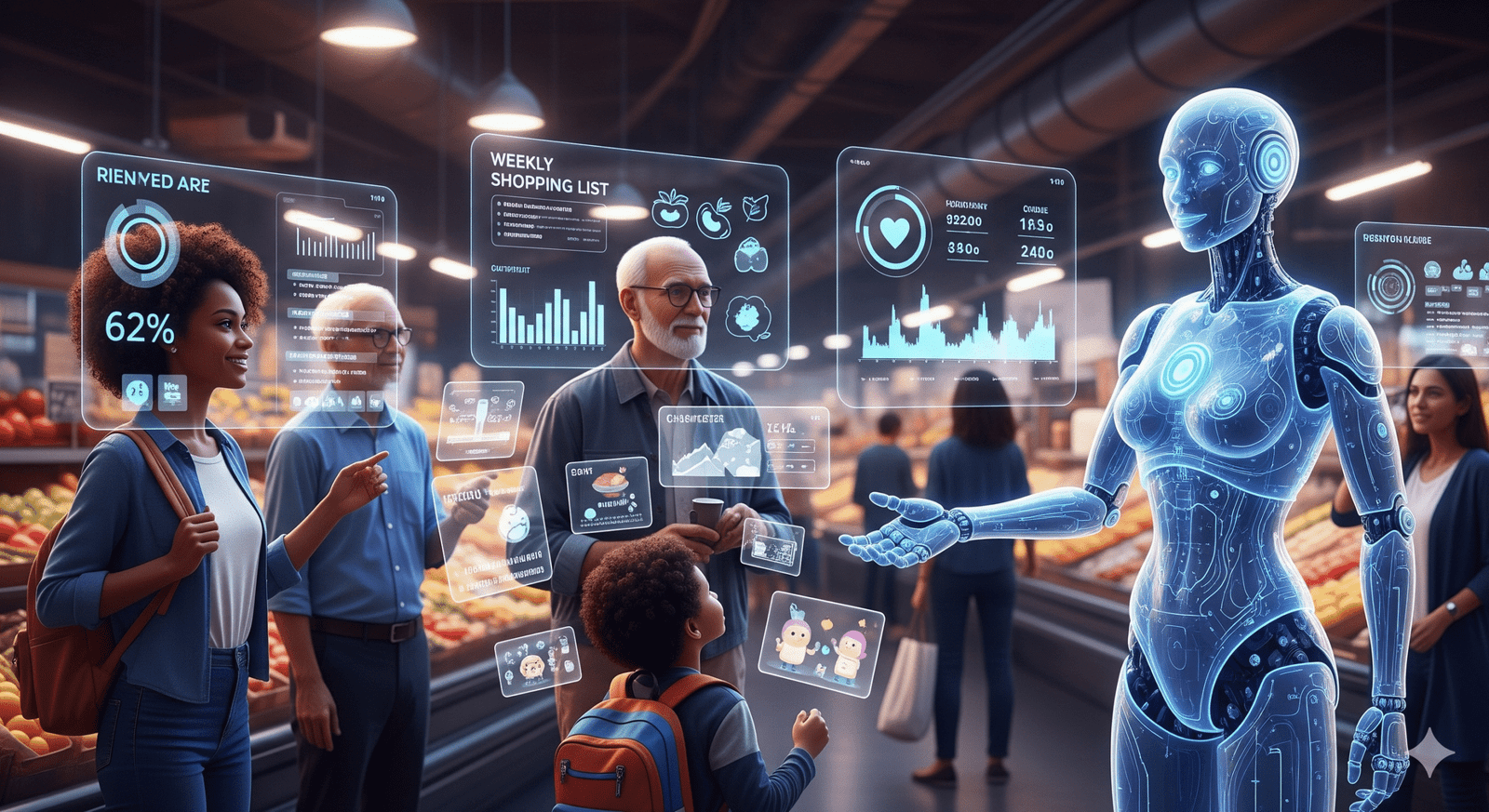
In the vast, crowded, and infinitely noisy digital marketplace, the modern customer has acquired a superpower: infinite choice. With a few taps on a screen, they can access a global bazaar of products, services, and brands, all vying for their attention and their dollars. In this environment, the old levers of marketing—a clever advertisement, a competitive price, a well-placed product—are no longer enough to build a lasting, profitable relationship. The new currency of business, the single greatest differentiator in the modern economy, is the customer experience.
For years, “personalization” has been the holy grail of marketers. We’ve learned to use a customer’s first name in an email subject line. We’ve mastered the art of retargeting, showing a customer an ad for the exact pair of shoes they were just looking at. While these tactics were a step in the right direction, they represent a shallow, often clumsy, form of personalization. It’s a strategy based on looking in the rearview mirror, reacting to what a customer has already done. At its worst, it can feel less like a helpful service and more like being followed around the internet.
As a media and marketing strategist who has spent two decades helping brands connect with their audiences, I am here to tell you that we are on the cusp of a new and far more powerful era. We are moving beyond simple personalization and into the world of hyper-personalization. This is not an incremental improvement; it is a fundamental paradigm shift. And it is being powered by the most transformative technology of our time: the AI Agent.
This guide is a strategic briefing for business leaders, CMOs, and customer experience professionals who are ready to move beyond the reactive tactics of the past. We will explore what hyper-personalization truly means, how autonomous AI agents are the essential engine for delivering it at scale, and how you can leverage this technology to create a customer experience so seamless, so intuitive, and so deeply relevant that your brand will feel less like a corporation and more like a trusted, indispensable friend.
What is the difference between personalization and hyper-personalization?
To understand the revolution, we must first draw a clear line in the sand. The terms are often used interchangeably, but they represent two vastly different philosophies.
Personalization: the era of segmentation and reaction
Traditional personalization is built on the concept of segmentation. It groups customers into broad buckets based on a few, often static, data points.
- How it works: The system relies on pre-set rules and historical data. For example: IF a customer has previously purchased running shoes, THEN add them to the “Runners” segment. IF a visitor is browsing from a California IP address, THEN show them the summer collection.
- A practical example: A customer named Jane buys a pair of running shoes from your online store. She is added to the “Runners” segment. The next week, she, along with 10,000 other people in that segment, receives a generic email blast with the subject line, “Hi Jane, 10% off all running shoes this week!”
- The feeling it creates: The experience feels, at best, vaguely relevant. Jane knows you know her name and that she bought shoes. The communication is retrospective and clearly a mass marketing effort. It doesn’t understand her context, her goals, or her current needs.
Hyper-personalization: the era of the individual and proaction
Hyper-personalization, powered by AI, shatters the concept of broad segments. It treats every single customer as a “segment of one.” It is dynamic, proactive, and based on a deep, real-time understanding of an individual’s entire context.
- How it works: An AI agent creates a unified, dynamic profile for each customer, combining their purchase history, their real-time website browsing behavior, their customer support interactions, and even external data signals. A machine learning model then analyzes this profile to predict their future intent.
- A practical example: Jane buys a pair of trail running shoes. The AI agent notes this specific product. A few weeks later, Jane visits the website again and spends ten minutes reading a blog post about “Training for Your First Ultramarathon.” The AI agent connects these data points and predicts her intent. The next day, instead of a generic coupon, Jane receives a highly personalized email. The subject: “Fueling Your Ultramarathon Journey, Jane.” The email contains a link to an expert guide on nutrition for long-distance trail runners, and a curated selection of products that are directly relevant to her predicted goal: hydration packs, high-mileage trail shoes, and energy gels.
- The feeling it creates: The experience feels magical. Jane feels seen, understood, and valued. The communication is not a sales pitch; it is a helpful, proactive service. The brand is no longer just a store; it is a trusted partner in her running journey.
This is the fundamental difference. Personalization says, “I know what you did.” Hyper-personalization says, “I understand what you are trying to do, and I am here to help you achieve it.”
The anatomy of an AI agent: the engine behind the experience
Delivering this level of one-to-one experience for millions of customers simultaneously is a task that is far beyond the capabilities of any human team or traditional, rule-based automation software. It requires a new kind of engine: the AI Agent. A sophisticated AI agent is comprised of several key components working in concert.
The unified customer profile: the agent’s long-term memory
The foundation of hyper-personalization is the ability to break down data silos. For most businesses, customer data is scattered across a dozen different systems: the e-commerce platform knows what they bought, Google Analytics knows what they browsed, the email marketing tool knows what they opened, and the customer support software knows what they complained about. An AI agent begins by integrating these sources into a single, unified customer profile. This creates a 360-degree view of every customer, allowing the AI to see the full context of their relationship with the brand.
The predictive brain: the machine learning models
This is the core intelligence of the agent. A series of machine learning models constantly analyzes the unified customer profile to make predictions.
- Propensity models: These models predict the likelihood that a customer will take a specific action. A “propensity to buy” model identifies visitors who are on the verge of making a purchase. A “propensity to churn” model identifies existing customers who are showing signs of disengagement and are at risk of leaving.
- Recommendation engines: These are the algorithms that power the personalized product and content suggestions. They go far beyond simple “customers who bought this also bought…” by analyzing an individual’s unique browsing history and preferences to find the most relevant items.
- Lifecycle stage models: The AI can predict where a customer is in their lifecycle. Are they a new customer who needs help getting started (onboarding)? Are they a loyal, repeat customer who might be interested in a new product line? Or are they a lapsed customer who needs a compelling reason to come back?
The conversational interface: the agent’s empathetic voice
The agent’s insights would be useless if it couldn’t communicate them in a human-like way. Natural Language Processing (NLP) and Generative AI give the agent its voice. This allows it to power intelligent chatbots that can have natural, unscripted conversations, or to generate the copy for hyper-personalized emails and website content that feels like it was written for an individual, not a segment.
The action layer: the agent’s hands and feet
Finally, the agent is not just an analyst; it is an executor. Through API integrations, it connects directly to your marketing and e-commerce platforms. It can:
- Dynamically change the content on your website.
- Trigger and send a personalized email from your email marketing platform.
- Add a customer to a specific audience in your advertising platform.
- Create a ticket in your customer support system. The agent doesn’t just provide insights; it acts on them autonomously.
The hyper-personalized customer journey: AI agents in action from first click to forever fan
Let’s walk through the entire customer lifecycle and see how an AI agent can transform every single touchpoint into a hyper-personalized experience.
The first impression: a dynamic, one-to-one welcome
The traditional website is a static, one-size-fits-all brochure. An AI-powered website is a dynamic, living entity that adapts to every single visitor.
- For the new visitor: A user arrives on your site for the first time from a Google ad for “vegan leather handbags.” The AI agent instantly recognizes the traffic source and the keyword. Instead of showing the generic homepage, it dynamically rearranges the content to feature the vegan handbag collection, a testimonial from an ethical fashion blogger, and a prominent banner about your company’s commitment to sustainable materials.
- For the returning customer: A loyal customer, who has previously purchased men’s shoes, logs in. The agent greets them by name. The homepage is instantly reconfigured to showcase the new arrivals in men’s footwear, accessories that match their previous purchases (like belts and wallets), and a link to a blog post about “How to Care for Your Leather Brogues.”
The guided discovery: a personal shopper for every single visitor
Instead of forcing users to navigate complex menus and filters, an AI-powered conversational chatbot can act as a personal shopper, guiding them to the perfect product.
-
The conversational approach: Imagine a customer on a skincare website.
- Agent: “Welcome! To help you find the perfect product, could you tell me a bit about your main skin concern? Are you primarily focused on hydration, anti-aging, or controlling oil?”
- User: “Mostly anti-aging.”
- Agent: “Great. And what is your skin type? Is it generally dry, oily, or combination?”
- User: “Dry.”
- Agent: “Perfect. Based on that, I would highly recommend our ‘Hydrate & Renew’ serum and our ‘Night Repair’ cream. They are specifically designed for dry skin with a focus on fine lines. Would you like to see the details?” This is a level of service that was previously only available in a luxury brick-and-mortar store, now available 24/7 to every single website visitor.
The proactive post-purchase experience: transforming a transaction into a relationship
For most businesses, the marketing journey ends at the “Thank You” page. For an AI-powered business, this is where the relationship-building truly begins.
-
Intelligent onboarding: A customer buys a complex new camera. Instead of just a generic order confirmation email, the AI agent triggers a personalized onboarding sequence.
- Day 1: An email with a link to a “Quick Start” video guide.
- Day 3: An email with a link to a blog post: “5 Common Mistakes to Avoid with Your New Camera.”
- Day 7: An email inviting them to a free webinar on “Introduction to Portrait Photography.”
- Predictive support: The AI agent knows from analyzing support tickets that customers who buy a particular coffee machine often have questions about the descaling process after about 60 days. On day 55, the agent proactively sends the customer an email with the subject line, “A Quick Tip for Your Coffee Machine,” containing a simple, 1-minute video guide on how to descale it. This solves a problem before the customer even knows they have it, creating a powerful feeling of being cared for.
The loyalty loop: anticipating future needs and building lifetime value
The ultimate goal of hyper-personalization is to build lasting loyalty.
- Predictive re-ordering: The agent tracks purchase cycles. If a customer buys a 30-day supply of a particular supplement, the AI can trigger a personalized re-order reminder email on day 25, perhaps with a small discount for subscribing to a recurring order.
- Anticipating life events: The AI can detect shifts in buying patterns. A customer who has been buying products for a “home for two” suddenly starts buying baby products. The agent can adapt its future recommendations to include family-oriented products and content, growing with the customer as their life changes.
The north star of modern marketing: building a brand that feels like a friend
The relentless pursuit of efficiency and scalability in the digital age has often come at a cost: the human touch. We have become incredibly good at reaching millions of people, but we have often forgotten how to talk to one person at a time. Hyper-personalization, powered by AI agents, is the technology that allows us to resolve this paradox.
The ultimate goal of this technology is not to be clever, futuristic, or to build complex systems for their own sake. It is to replicate, at a massive scale, the simple, powerful magic of the old-fashioned neighborhood shopkeeper—the one who knew your name, remembered what you liked, and recommended something new because they genuinely understood your needs and your tastes.
This is the new north star for marketing. The strategy is to move beyond transactions and build genuine, one-to-one relationships. The technology that makes this possible is the AI agent. By embracing this approach, you are not just optimizing your conversion rates; you are building a brand that feels less like an impersonal corporation and more like a trusted, empathetic, and indispensable friend. In a world of infinite choice, this deep, personal connection is the only sustainable competitive advantage.
Leave a Reply