

For decades, the art of business strategy has been a delicate dance between data and “gut feeling.” We’ve commissioned expensive market research reports, interpret the faint signals of a changing market. A successful leader was often described as having a preternatural ability to “feel” where the market was heading, to anticipate the next big trend before it became obvious. This intuition, honed over years of experience, has been the secret weapon of many of the world’s most successful companies.
But in the 21st century, the speed and complexity of the market have begun to overwhelm human intuition. Trends no longer develop over years; they explode into existence overnight on platforms like TikTok. Consumer sentiment can shift globally in a matter of hours, driven by a single viral video or a news event. The volume of data—from social media conversations, search trends, news articles, and competitor activities—has become an incomprehensible, roaring ocean. Trying to navigate this ocean with the old tools of manual analysis and gut feeling is like trying to cross the Atlantic in a rowboat.
As a media and marketing strategist who has spent the last 20 years helping businesses make sense of this chaos, I can tell you that a new class of navigator has arrived. Artificial Intelligence, and specifically the rise of autonomous AI Agents, is fundamentally transforming the discipline of market analysis. These are not just better tools for creating charts and graphs. They are intelligent, tireless research partners that can read, understand, and synthesize vast quantities of information at a scale and speed that is humanly impossible.
This is not a guide about replacing the strategic wisdom of an experienced leader. It is a strategic briefing on how to augment that wisdom with the unparalleled analytical power of the machine. We will explore what AI agents are, how they perform a deep and continuous analysis of market trends, and how you can leverage their insights to make faster, smarter, and more confident data-driven decisions that will give your business a formidable competitive edge.
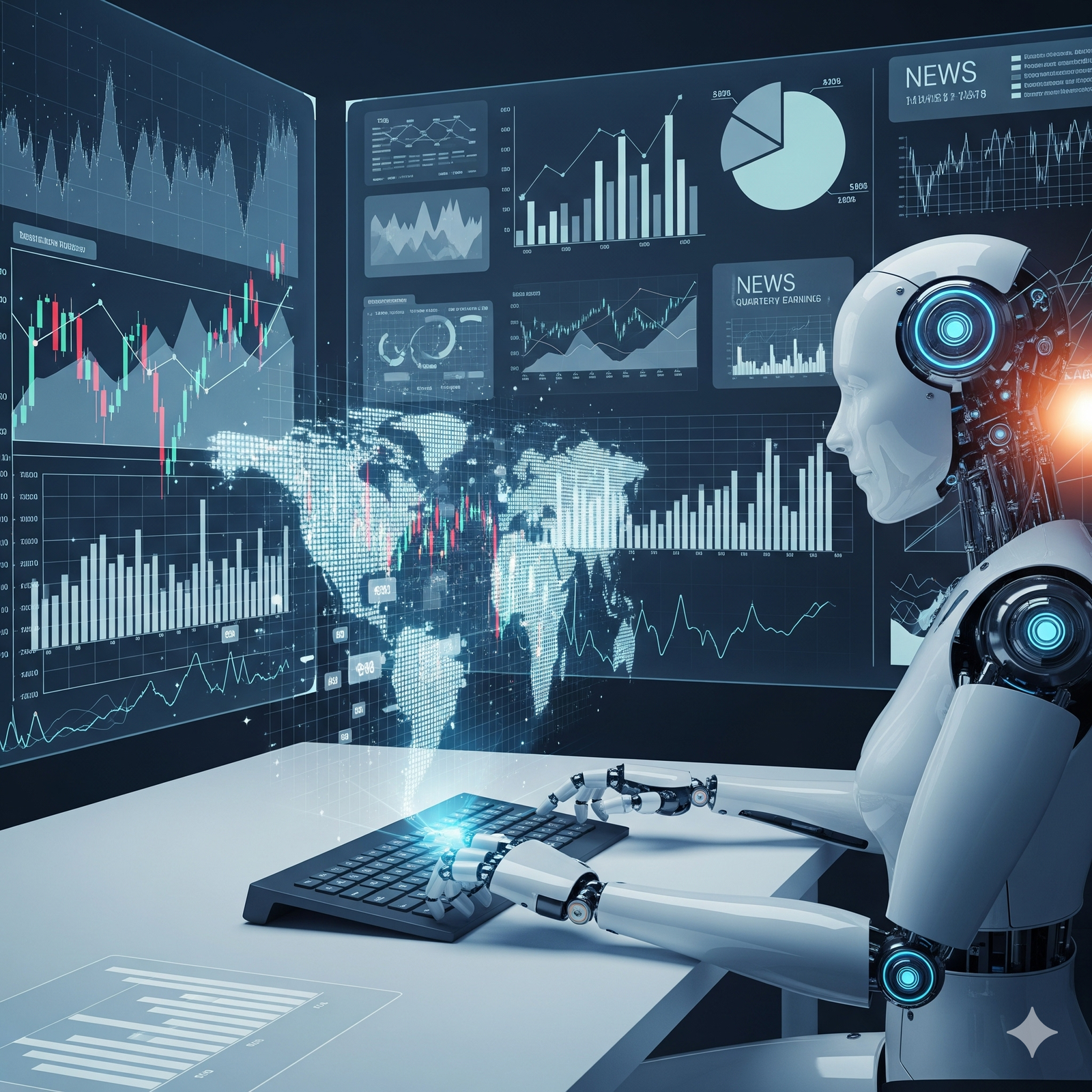
The old world: the inherent flaws of manual market analysis
To understand the magnitude of the AI-powered shift, we must first be honest about the limitations of the traditional approach to market and trend analysis.
The problem of latency: always looking backward
Traditional market research is, by its very nature, a historical exercise.
- The process: It often involves commissioning a market research firm, which then spends months conducting surveys, interviews, and focus groups. The data is compiled, analyzed, and presented in a comprehensive report.
- The flaw: By the time this beautiful, expensive report lands on the CEO’s desk, it is already a snapshot of the past. The market conditions, consumer attitudes, and competitive landscape may have already shifted significantly. Manual analysis is always looking in the rearview mirror, making strategic decisions based on an outdated map of the world.
The problem of sampling bias: hearing only a fraction of the conversation
Because it’s impossible for humans to analyze the entire market, traditional research relies on small samples. A focus group might consist of a dozen people. A survey might reach a few thousand.
- The flaw: These small samples can easily be unrepresentative of the broader market. The opinions of a dozen people in a focus group in Chicago may not reflect the feelings of millions of consumers across the country. Furthermore, people in a formal research setting may not always express their true, unfiltered opinions. We were making multi-million dollar decisions based on a tiny, often biased, whisper of the total market conversation.
The problem of data silos: failing to see the big picture
Even within a company, data is often trapped in silos. The social media team sees the online chatter. The sales team hears direct customer feedback. The R&D team reads scientific papers.
- The flaw: These different data points are rarely connected. The human capacity to synthesize these disparate sources of information is limited. A critical insight might be buried in a customer support ticket, while the marketing team is planning a campaign based on outdated survey data. The organization fails to see the big picture because the pieces of the puzzle are scattered across different departments.
The new intelligence: defining the AI agent as a market analyst
An AI Agent is not just a better, faster version of a human analyst. It is a different kind of entity altogether. It is a goal-oriented, autonomous system designed to be a 24/7, real-time sensor for your entire market.
From passive tools to a proactive intelligence system
A traditional tool (like Google Trends) is passive. You have to have an idea first (“I wonder if searches for ‘vegan leather’ are increasing?”), and then you use the tool to check your hypothesis. An AI Agent is proactive. You give it a high-level goal: “Monitor the global market for sustainable materials in the fashion industry and identify emerging trends and opportunities.” The agent then works autonomously in the background, constantly scanning, analyzing, and only alerting you when it discovers a significant, actionable insight.
The core technologies that power the analysis
This proactive capability is driven by a combination of AI technologies:
- Natural Language Processing (NLP): This is the agent’s ability to read and understand human language at a massive scale. It can process millions of news articles, social media posts, patent filings, and scientific papers, understanding not just the keywords but the context, sentiment, and nuances of the text.
- Machine Learning (ML): The agent uses machine learning models to identify patterns and correlations in the data that a human would never see. It can learn what a nascent trend “looks like” in the data before it becomes mainstream.
- Predictive Analytics: By analyzing historical data and real-time inputs, the agent can create statistical models to forecast future outcomes. It can move from telling you what is happening now to predicting what is likely to happen next.
AI agents in action: how they analyze market trends in real-time
Let’s move from the conceptual to the practical. How does an AI agent actually perform its analysis? It does so by continuously monitoring and synthesizing data across several key domains.
Real-time social listening and public sentiment analysis
The global conversation is happening on social media, in forums, and in product reviews. An AI agent acts as your digital ear to the ground.
- What it does: The agent is connected to the firehose of public data from platforms like Twitter (X), Reddit, public Facebook pages, and major online forums. It is programmed to track mentions of your brand, your competitors, and key industry topics.
-
How it analyzes: It uses NLP-powered sentiment analysis to categorize these conversations in real-time. It doesn’t just count mentions; it understands the emotion behind them. It can create a live dashboard showing:
- The overall sentiment for your brand (positive, negative, neutral) and how it’s trending over time.
- A spike in negative sentiment related to a specific product feature, alerting you to a potential quality control issue before it becomes a crisis.
- A surge in positive sentiment for a competitor’s new marketing campaign, allowing you to quickly analyze their strategy.
- The strategic advantage: This transforms social listening from a manual, reactive process of checking your mentions into a proactive, strategic tool for reputation management and understanding the unfiltered “voice of the customer.”
Predictive search trend analysis: seeing the future of demand
Google search data is the world’s largest database of human intent. AI allows us to analyze this data in a much more sophisticated way than ever before.
- What it does: The agent goes far beyond simply looking at Google Trends. It analyzes vast datasets of anonymized search queries to identify emerging patterns and topics.
-
How it analyzes:
- Topic clustering: The AI can identify when a cluster of related, niche keywords all start to grow in search volume simultaneously. This often signals the birth of a new trend. For example, it might detect a simultaneous rise in searches for “mushroom leather,” “cactus leather,” and “lab-grown silk.” The AI can group these into an emerging meta-trend it labels “Next-Generation Sustainable Textiles.”
- Predictive forecasting: By analyzing the historical growth trajectory of past trends, the machine learning models can forecast the potential future growth of these new, emerging trends. It can alert you: “The ‘Next-Gen Textiles’ topic cluster is showing a growth pattern similar to the ‘Vegan Leather’ trend from five years ago, and we predict it will become a mainstream topic within 18 months.”
- The strategic advantage: This allows your business to get ahead of the curve. You can create content, develop products, and build authority in a new niche before it becomes hyper-competitive, positioning your brand as a first-mover and a leader.
Automated competitor intelligence: deconstructing their every move
Your competitors’ digital activities are a rich source of strategic intelligence. An AI agent acts as your dedicated competitive analyst, watching their every move.
- What it does: The agent continuously monitors the websites, social media profiles, and ad campaigns of your key competitors.
-
How it analyzes:
- Content strategy deconstruction: The agent uses NLP to analyze every new piece of content your competitor publishes. It can automatically identify the new topics they are targeting, the keywords they are trying to rank for, and the overall strategic direction of their content marketing.
- Advertising intelligence: The agent can track the new ad campaigns your competitors launch on platforms like Google and Facebook. It can analyze the ad copy, the visuals, and the value propositions they are testing, giving you a real-time view of their promotional strategy.
- Product launch and pricing monitoring: The agent can monitor their website for changes, instantly alerting you when they launch a new product, change their pricing, or update a key feature.
- The strategic advantage: This turns competitive analysis from a static, quarterly report into a live, continuous intelligence feed. You can react to your competitors’ moves in days, not months, and make more agile, informed strategic decisions.
Identifying “weak signals” and new market opportunities
Perhaps the most powerful capability of an AI agent is its ability to connect disparate, seemingly unrelated data points to uncover “weak signals”—the earliest, faintest signs of a major market shift or a new opportunity.
- What it does: An AI agent can be programmed to read and synthesize information from a vast range of sources simultaneously: scientific research papers, patent filings, venture capital funding announcements, and new government regulations.
-
How it analyzes (an example):
- The agent detects a new patent filing by a university for a novel, lightweight, fire-resistant polymer.
- A week later, it detects a venture capital funding announcement for a startup in the electric vehicle (EV) battery space.
- Two weeks later, it detects a new government regulation being proposed regarding stricter fire safety standards for EV batteries.
- The strategic insight: A human analyst might miss the connection between these three separate events. The AI agent, however, can connect the dots and generate a high-level insight: “A new, significant market for fire-resistant polymers is emerging in the EV battery sector, driven by new technology and upcoming regulations. We should investigate if our existing products are suitable or if we should initiate an R&D project in this area.” This is the highest level of data-driven strategic decision-making.
The new command center: your strategy for a human-AI hybrid future
The insights generated by an AI market analysis agent are not the end of the strategic process; they are the beginning. The role of the human business leader and strategist becomes more important than ever.
The AI agent is the ultimate “what” and “what if” machine. It tells you what is happening in the market with unprecedented clarity and provides you with data-driven forecasts of what if certain trends continue.
The human expert’s role is to answer the crucial “so what” and “now what” questions.
- “So what?” (Interpretation and Context): The human leader takes the AI’s data-driven insight and places it into the context of the company’s unique strengths, weaknesses, and strategic goals. Does this emerging trend align with our brand’s mission? Do we have the resources and expertise to act on this opportunity?
- “Now what?” (Action and Strategy): The human then makes the final strategic decision. They devise the action plan, allocate the resources, and lead the team in executing the strategy.
The future of business strategy is not a world run by autonomous AI. It is a world where human intuition and experience are augmented and amplified by the unparalleled analytical power of the machine. The AI agent provides the map and the compass; the human leader is still the captain who must steer the ship. By embracing this collaborative, “centaur” model, you are not just making your business smarter; you are making it more agile, more proactive, and more prepared for the future than ever before.
Leave a Reply